
Protein Picks For Managing Insulin Response

When we think of managing insulin levels, carbohydrates often take center stage. However, not all protein foods affect your insulin response in the same way. While proteins are essential for muscle repair, immune function, and overall health, some protein-rich foods can trigger a higher insulin release than others. This blogpost is designed to help you understand how different protein foods impact your insulin levels, from those that keep it stable to those that cause a stronger spike.
Whether you're managing insulin sensitivity, diabetes, or just looking to optimize your nutrition for energy stability, this post will be your guide to making smarter protein choices.
Why Certain Amino Acids Simulate Insulin
How It Works: The digestion of protein breaks it down into amino acids, which are absorbed into the bloodstream. Some amino acids, particularly branched-chain amino acids (BCAAs) like leucine, isoleucine, and valine, have a direct impact on insulin secretion. Among them, leucine is the most potent stimulator of insulin.
Mechanism: Leucine plays a crucial role in muscle protein synthesis, but it also directly signals the pancreas to release more insulin. Insulin helps shuttle amino acids into muscle cells for growth and repair, which is why even protein-dense, low-carb foods can provoke insulin secretion.
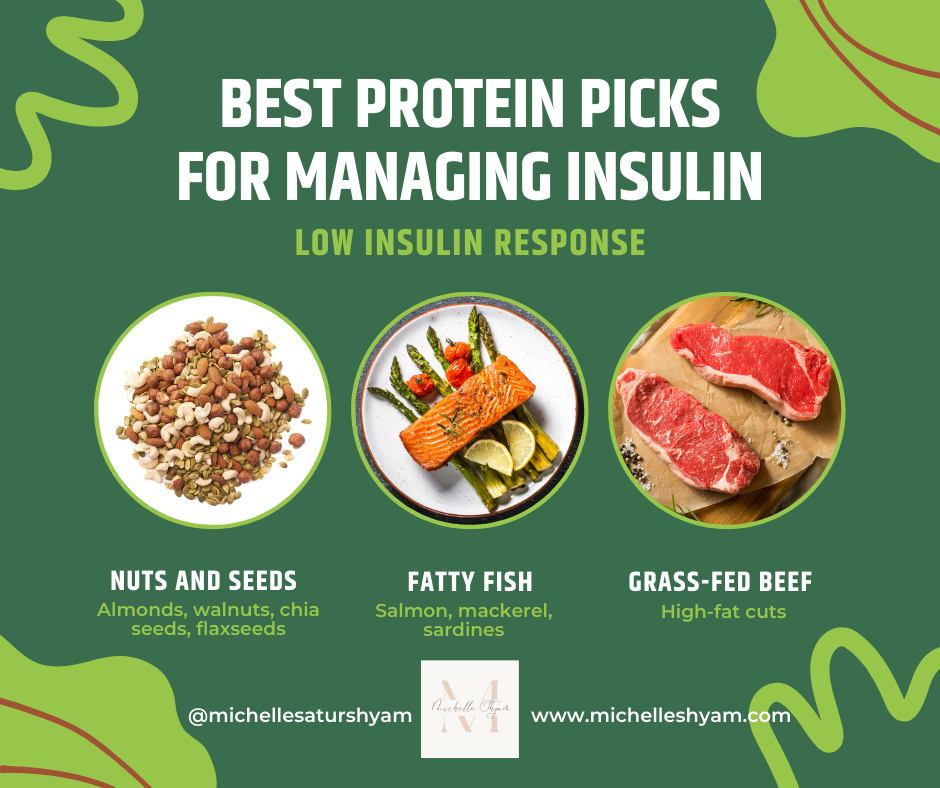
Nuts And Seeds
Examples: Almonds, walnuts, chia seeds, flaxseeds, pumpkin seeds
Insulin Response: Low
Why: Nuts and seeds contain a combination of protein, fiber, and healthy fats, which slows digestion and blunts the insulin response. They are low in carbohydrates and do not have a high amount of BCAAs, which helps keep insulin levels low.
Fatty Fish
Examples: Salmon, mackerel, sardines
Insulin Response: Low
Why: Fatty fish contain high-quality protein but are also rich in omega-3 fats, which help lower inflammation and support stable insulin levels. The fat content in these fish slows digestion and reduces the insulin response compared to leaner fish varieties.
Grass-Fed Or Organic Beef (High-Fat Cuts)
Insulin Response: Low to moderate
Why: While lean beef has a moderate insulin response due to its protein content, fattier cuts of beef (like ribeye, short ribs, or ground beef) tend to have a lower insulin response because the fat slows the release of amino acids into the bloodstream.

Lamb And Game Meats
Examples: Venison, bison, lamb shoulder
Insulin Response: Low
Why: Like beef, fatty cuts of lamb or game meats have a lower insulin response due to their combination of protein and fat. The absence of carbohydrates or significant insulinogenic amino acids reduces insulin secretion.
Hard Cheeses
Examples: Cheddar, Parmesan
Insulin Response: Lower than soft dairy products
Why: Hard cheeses have less lactose (milk sugar) than soft dairy products like yogurt and milk. The high-fat content and relatively low amount of carbohydrates result in a slower insulin response compared to other dairy products.

Tempeh And Tofu
Insulin Response: Low
Why: As plant-based proteins, tempeh and tofu have lower insulin responses compared to fat-free animal proteins. They contain a moderate amount of protein and beneficial fats, and they don’t stimulate insulin secretion. Additionally, tempeh has more fiber, further reducing insulin response.
Shellfish (Lower Insulin Index Than Lean Fish)
Examples: Shrimp, lobster, crab
Insulin Response: Low to moderate
Why: While shellfish contain high-quality protein, they typically have lower levels of insulin-stimulating amino acids compared to lean fish like cod or sole. The absence of carbohydrates in shellfish also contributes to a lower insulin response.
Nut Butter (Natural)
Insulin Response: Low
Why: Peanuts and peanut butter (without added sugar) provide protein, healthy fats, and fiber, which slows digestion and minimizes insulin release. Although peanuts contain some protein, their combination with fat results in a more stable insulin response.

Eggs
Insulin Response: Moderate
Reason: Eggs are low in carbohydrates, but they have a moderate insulin index because of their high protein and fat content. Whole eggs can induce lesser insulin release than egg whites due to their fat and protein combination.

Lentils And Legumes
Insulin Response: Moderate
Chickpeas: Chickpeas have a moderate insulin response due to their balance of protein, complex carbs, and fiber. They contain a reasonable amount of protein but are rich in fiber, which buffers the insulin effect.
Edamame (Soybeans): Edamame has a moderate to slightly higher insulin response compared to other beans because soy is higher in protein and contains more isoflavones, which may have mild insulinotropic effects. However, the fiber and fat content in soybeans help keep this response moderate.
Beans (Black, Kidney, Pinto, etc.): These beans typically cause a moderate insulin response due to their protein, fiber, and carbohydrate composition. Their slower digestion due to fiber results in a more controlled insulin release compared to fast-digesting proteins or refined carbs.

These protein sources are highly insulinogenic, especially for individuals sensitive to insulin levels. Adding healthy fats or fibrous foods can help balance these proteins' effects on insulin, allowing for a more gradual response.
Cottage Cheese (Low-Fat)
Casein Content: Cottage cheese is mostly casein protein, which is slower to digest than whey but still leads to a substantial insulin response.
Minimal Fat Content: Low-fat varieties lack the natural fats that would slow absorption, causing a more pronounced insulin effect.
Dairy Peptides: The bioactive peptides in casein continue to stimulate insulin despite its slower digestion.
Processed Meats (Low-Fat Deli Meats, Lean Sausages)
Additives: Many processed meats contain additives that can impact insulin response, such as certain fillers or flavor enhancers.
High Protein, Low Fat: Low-fat deli meats are high in protein with little to no fat to moderate the insulin response.
Quick Digestion: These meats are often finely ground and cooked, which can lead to faster digestion and absorption, causing a higher insulin spike.
Greek Yogurt (Non-Fat)
Protein Density: Greek yogurt is strained, making it very high in protein concentration per serving. Non-fat varieties lack fat to buffer insulin release.
High Leucine and Dairy Proteins: The dense protein content, including whey and casein, drives a high insulin response.
Strained Lactose: Greek yogurt is low in lactose, but the remaining carbs and proteins still stimulate a significant insulin response due to the high protein load.

Tilapia (Lean While Fish) & Lean Meats (Chicken Breast, Turkey Breast)
High Protein-to-Fat Ratio: Lean meats and fish have very little fat to slow down digestion, leading to a more rapid release of amino acids and a corresponding spike in insulin.
BCAA Content: Lean meats & tilapia are rich in BCAAs, which are insulinogenic, especially leucine.
Absence of Carbs and Fiber: The lack of fiber or carbs means protein is absorbed quickly, resulting in a faster insulin response.
Whey Protein Supplements
Highly Concentrated Protein: Whey protein isolate or concentrate delivers a high dose of protein per serving, leading to a rapid and substantial increase in insulin.
Processing and Purity: Whey protein in supplement form is processed to be quickly absorbed, which amplifies the insulin response.
Leucine-Rich Content: High leucine levels drive insulin secretion, making whey protein one of the most insulinogenic protein sources.
Understanding these differences can empower you to tailor your meals for better blood sugar balance, whether you're aiming to improve metabolic health, manage insulin sensitivity, or simply avoid energy crashes. Use this knowledge to choose protein sources that align with your body’s needs and your long-term health goals—because optimizing insulin isn’t just about cutting carbs; it’s also about choosing smarter proteins.


Comments